
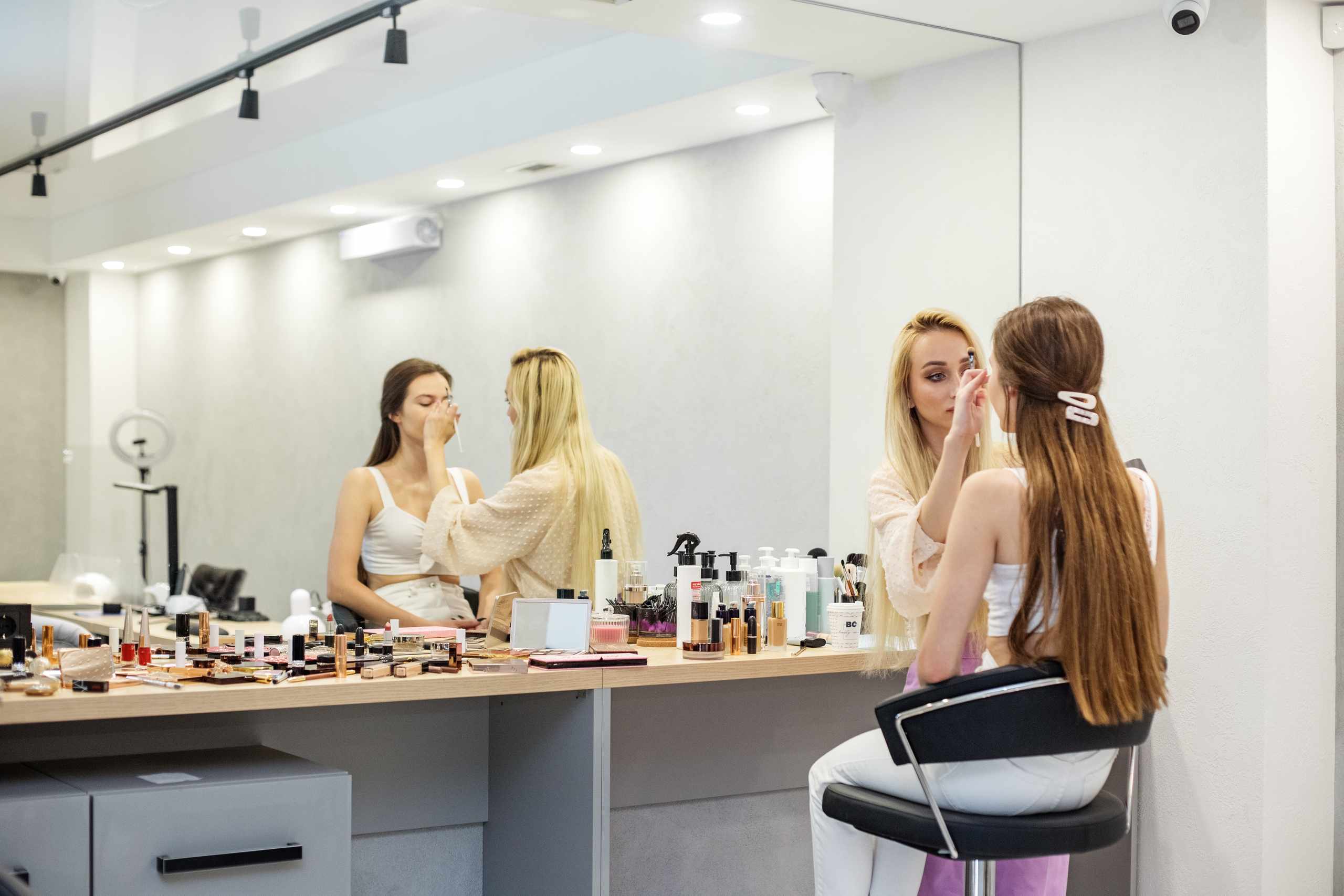
Sometimes, your makeup looks great; other times, your makeup products just refuse to cooperate with you. Nothing is more frustrating for a novice than a bad makeup day that comes out of nowhere. It feels like you’re not getting better, right? Not true. There is a reason for that, your practice. You can be doing the same exact thing over and over and over again, but the outcome is all over the map and you just can’t figure out why. The real culprit is uneven practice.
If your conditions aren’t the same with each makeup practice session, you can’t really give your brain and muscles an opportunity to learn properly. Different lighting, rushed conditions, too many new products, and new makeup looks can all throw you off track. Your main focus needs to not be about the next makeup transformation; your main focus needs to be on developing consistent habits that you can do on autopilot and have that help you master the technique of how to create a great looking look every time.
Start with a focus goal. Rather than do a full-face makeup application every time you practice, focus on just one part of your face. Do that same exact thing over and over. Focus on just base application for a week. Focus on just eyeshadow edges for a week. Focus on just brows for a week. When your repetition is consistent with the focus of what you are applying, you can more easily notice what the actual problems are. For example: Eyeliner is not applied evenly. You are doing the exact same thing, over and over, and it looks different each time, that’s a problem. Whereas: Bold eyes one day, shiny skin another day, super defined contour the day after that; this makes it very hard to tell what’s good and what’s not. Practice consistency starts with the makeup practice itself.
Another huge mistake many beginners make is practicing makeup when they plan to use the makeup. When your makeup application has a purpose, you want it to look good and when you are rushed to look good, it’s easy for that process to get messed up. Instead of that type of practice, practice on your own, and without concern for a great final result. Set up the exact same lighting, same exact mirror, and practice doing the exact same look (or maybe just one step or technique within the makeup routine) each day. For instance: do the eye makeup three days in a row, then the next three days, practice the exact same eyeshadow look again, three days in a row. The point isn’t to practice a lot of variety; it’s to discover how your makeup behaves when you apply your eye makeup with the exact same eye angle, when you use a little less concealer in one area versus another, or you blend an extra pass with your makeup sponge.
Here is a simple 15-minute makeup practice plan: Spend five minutes prepping the face exactly the same way each time (for example, moisturizing before foundation application or setting brows with a gel before applying powder product). Spend seven minutes working the eye makeup or whatever makeup feature you have focused on, paying close attention to every little step (for example, place a little more or a little less blush every time on the cheeks or place the same eyeshadow color on each eyelid with the exact same shade and pressure). Spend three minutes looking closely at the final result in the mirror and make one short note about what it was like (for example, “too much color right next to right inner brow” or “right cheek has a smoother application than the left”). These little tips are the information you need to help you practice and help each subsequent makeup session build on what you’ve learned.
When it seems like you’re not improving at all, examine the environment you are practicing in to ensure nothing is throwing you off. The lights you’re using to practice may not give you the proper insight of whether your base makeup is blended properly. Using different makeup brushes every time can lead to inconsistent application, which can make you think it’s your technique, when it’s just that. Using a lot of different products too often can make it more difficult to determine what is the problem if the product you are using is new. When something in your practice always ends up going wrong, cut out all distractions. Stick to the exact same foundation for a few sessions and use that for your practice sessions. Try using a brush you know for blush and try it on again. Apply the same shape of eyeshadow a few times in a row before you decide it doesn’t suit you. That type of control leads to clearer makeup feedback, and that leads to faster improvement.
Once you practice consistently with the exact same things in the exact same ways (and not just once or twice), your makeup is more likely to look consistent and great. It does not have to be the exact same every time; it just needs to be something your hands and eyes are comfortable with. Once you become confident with your soft base, symmetrical brows, and well-blended eyeshadow, it will become much more fun to try new styles. Once the foundations of applying makeup are there, you are able to create. That happens when you practice small things, for a little while, every single time, enough to know something.