
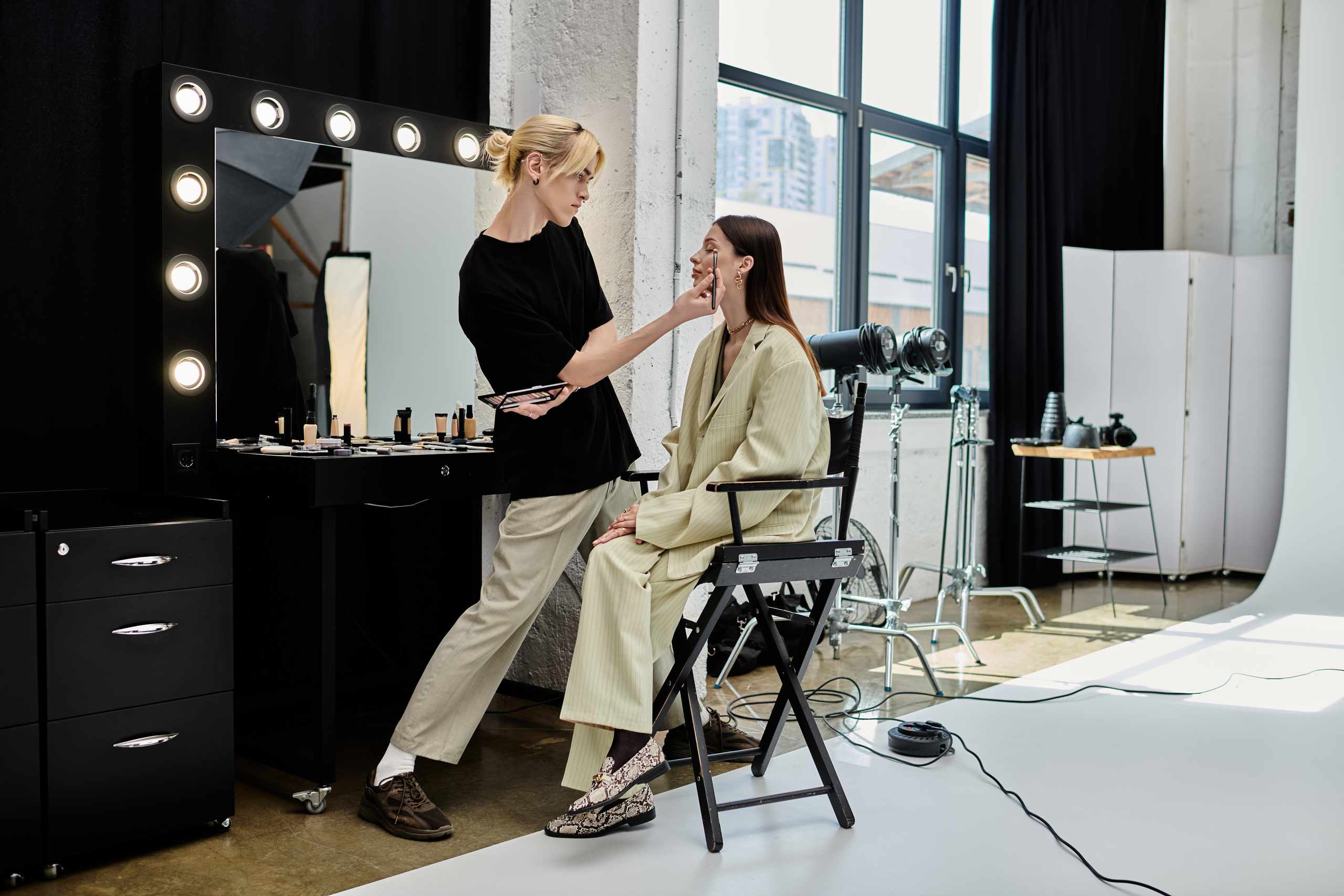
There are very few beginner makeup wearers who can’t point at one area that is giving them more frustration than the rest. Is it liner that doesn’t look the same on each eye? Foundation that looks fine inside but grainy outside? Blush placed poorly? Brows that get wonky? Shadow that looks uneven before you’ve finished applying to your other eye? When there’s a problem feature, a natural response can be to ignore it, work around it, or keep trying to fix it within a full makeup routine, which slows your improvement. What works better is to break it down and just focus on that one problem feature, rather than practicing it as part of a full face.
The reason this works is that many issues in makeup don’t occur at random. There will always be a couple of places where things break down (too much product, bad placement, applying too hard, trying to fix an error when it already shows). Take eyeliner, for example. The issue might not be with creating the wings; you might have inconsistent angles on your liner between eyes or your line might become thick near the inner corner too early. Maybe blush always ends up looking like a clown nose? The issue might simply be where the brush lands when you first apply the blush. When you stop saying “it’s my eye makeup, I can never do it well” and start saying “my shadow brush is moving back and forth” it’s a lot easier to correct the problem.
You may also want to make sure you’re not practicing your hardest feature only once, at a moment of urgency, just before you have to go. When you’re under pressure, your hand tends to move faster, your brush moves harder and applies too much product, and tiny mistakes feel very big. If eyeliner takes you hours, try taking a different route: pick one problem feature to focus on and dedicate 10-15 minutes on your own, without anything else going on. If your brows give you problems, practice them before you apply the rest of your makeup. Fill them in, wipe them out and do that over and over. If your shadow blending is always messy, try blending one shadow onto your eye three times, using only two shades. Doing many reps on a single problem area is a better way to learn than doing a whole face over and over hoping your problem area will eventually improve.
A fifteen-minute workout like that could do a world of good for nearly every makeup area in your life. Spend the first three minutes in front of a mirror, no makeup, and really observe your face, seeing the natural shape and not fighting the problem area, then spend the next 8 minutes of the workout repeating only one controlled thing (like tracing your eye liner with a dotted hand motion, placing concealer only where you have darkness, or lightly patting your blush higher up until you think it looks right). Finally, spend the last four minutes looking at the difference between the two sides and make notes on just one or two small things about the experience: “Less pressure made it go on better”; “a smaller brush kept the eyeshadow lower” and so on. Writing those notes down is helpful because it turns a vague feeling into a specific thing that could actually matter.
It also helps if the feedback you give yourself on your makeup application is specific. “It looks ugly” isn’t helpful; “the left wing of my liner is going up higher than the right,” “my contouring is too low on my cheek and it makes it look saggy” or “my nose contour is dragging my face down” and so on are. If you feel really stuck, take a photo of your work after each attempt from exactly the same spot and go back through and compare the photos. You’ll be able to pick up on trends much faster than if you just rely on your memory: “Oh wait, why is my right eye darker? I must have kept picking up extra shadow in the brush,” or, “Why does my foundation look more textured around my nose? I probably applied too much there.” These little things that you might not have realized before are exactly what makes a better makeup artist.
Ultimately, a problem feature only becomes a manageable part of your life when it stops being a mysterious thing you can never control. Once you slow down to think about what you’re doing and take the time to practice one area without doing a whole face, you can start to improve. The progress happens slowly. One week the brow shape might look better. After a few more attempts, the shadow blend might feel easier. After that, it’s just a matter of time before you’re applying makeup as effortlessly as you used to before your problem feature started making your makeup difficult.